Interview guides are the backbone of a structured hiring process. For recruiters and SMB teams, creating effective guides ensures every candidate is evaluated consistently, fairly, and with a focus on the skills that matter most. In this article, you’ll discover a practical, step-by-step template for building interview guides that improve candidate evaluation and reduce bias—plus tips for leveraging AI tools like Hirero to streamline your approach.
Why Effective Interview Guides Matter in Hiring
An interview guide is more than a list of questions—it's a roadmap for structured, fair, and effective candidate assessment. By standardizing the process, guides help reduce unconscious bias and ensure each candidate is measured against the same criteria. This is especially crucial for SMBs and agencies that want to make evidence-backed hiring decisions. For more on the value of structure, see Structured Interviews: Your Secret Weapon for Unbiased Hiring.

Step 1: Define the Job Role and Key Competencies
Start by clarifying the job’s responsibilities and the competencies required for success. Work with hiring managers to identify both technical and soft skills. This clarity ensures your interview questions align with what matters most for the role. For example, a sales position may prioritize communication and resilience, while a developer role focuses on problem-solving and technical expertise.
- Review the job description and update as needed.
- List the essential hard and soft skills.
- Consult with stakeholders to prioritize competencies.
- Document specific behaviors that demonstrate each competency.
Step 2: Structure the Interview Format and Timing
A clear interview structure keeps conversations focused and ensures every candidate has the same experience. Decide on the interview format (in-person, virtual, panel), allocate time for each section, and note who will ask which questions. This approach also helps manage time and expectations for both interviewers and candidates.
- Introduction and role overview (5 min)
- Behavioral and situational questions (20 min)
- Technical or task-based questions (15 min)
- Candidate questions and wrap-up (5 min)
Step 3: Develop Behavioral and Situational Interview Questions
Behavioral and situational questions help you assess how candidates have handled challenges in the past or how they might respond to scenarios on the job. Use the STAR method (Situation, Task, Action, Result) as a framework for both asking and evaluating answers. For more comprehensive evaluation, see evaluate candidates holistically.
- Describe a time you had to meet a tight deadline. What was your approach?
- Tell me about a situation where you resolved a conflict within your team.
- Give an example of how you adapted to a significant change at work.
- How would you handle a client who is unhappy with your service?
Step 4: Incorporate Evidence-Based Scoring Criteria
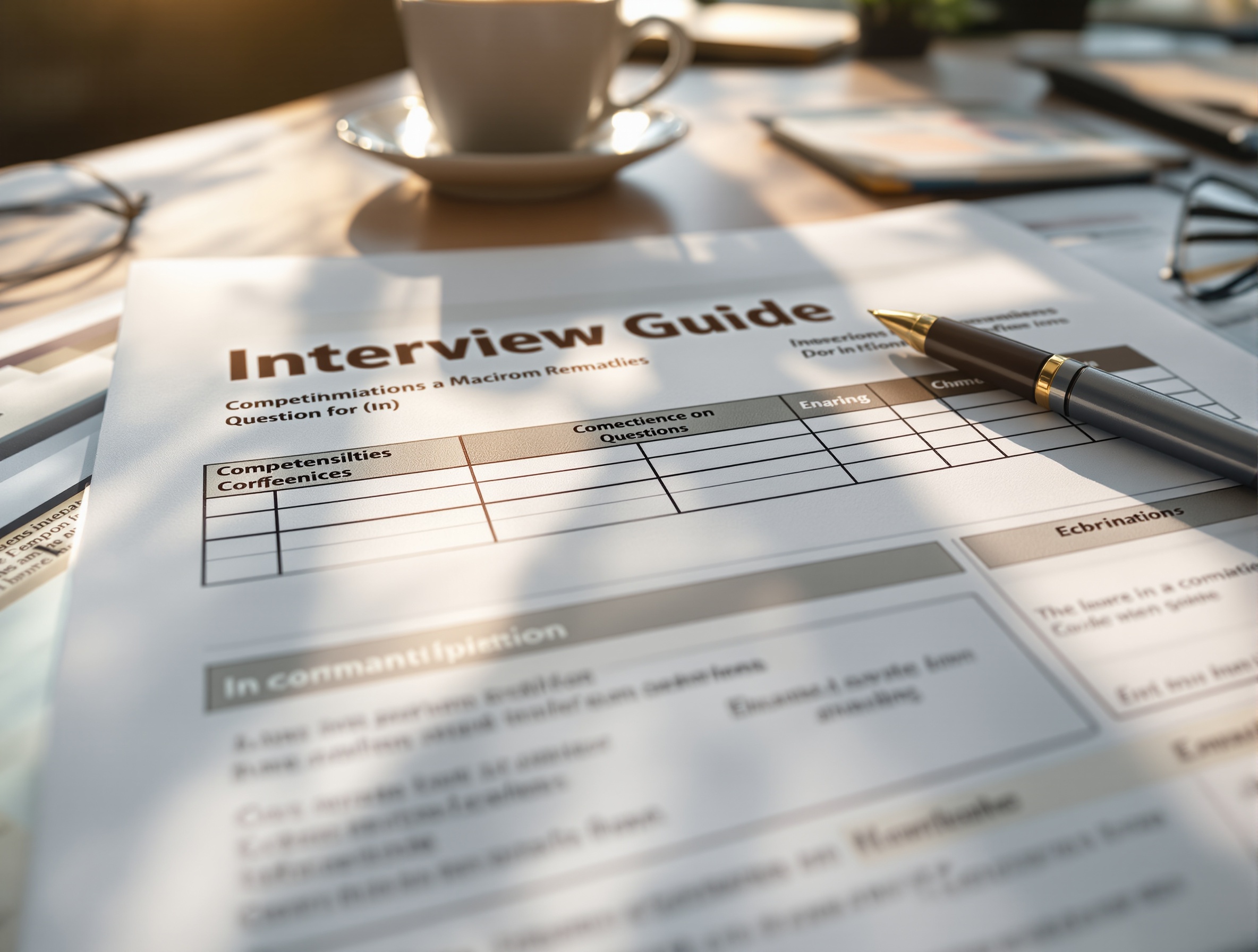
Scoring criteria ensure interviewers evaluate responses objectively. Use a simple rating scale (e.g., 1-5) with clear definitions for each score. Provide examples of what a strong, average, or weak answer looks like for each competency. This approach supports fairer hiring and makes it easier to compare candidates.
| Score | Description | Example |
|---|---|---|
| 5 | Exceptional | Clear, detailed example; exceeded expectations |
| 3 | Satisfactory | Adequate example; met expectations |
| 1 | Needs Improvement | Vague or incomplete example; did not meet expectations |
Step 5: Include Instructions for Interviewers to Reduce Bias
Bias can creep into interviews in subtle ways. Your guide should remind interviewers to stick to the script, avoid leading questions, and evaluate answers based on evidence—not gut feeling. Encourage note-taking and provide space in the template for observations. For more on unbiased hiring, check out Structured Interviews: Your Secret Weapon for Unbiased Hiring.
Step 6: Customize the Guide for Different Roles or Departments
Every department and role is unique. While your interview guide template should have a consistent structure, tailor the competencies, questions, and scoring to fit each job. Involve department leads in customizing the guide to ensure it reflects real-world expectations and challenges.
- Adapt core questions for role-specific scenarios.
- Update technical or task-based sections for each department.
- Regularly review and refresh guides as roles evolve.
Tips for Using AI Tools Like Hirero to Automate Interview Guide Generation
AI-powered platforms like Hirero can save recruiters hours by automating the creation of interview guides. These tools analyze job descriptions, suggest evidence-based questions, and generate scoring templates. For more on automation, see How AI-Powered Interview Screening Can Save Recruiters Time and Money. Using AI ensures your guides are up-to-date and rooted in hiring best practices without manual effort.
- Auto-generate interview questions aligned to competencies.
- Build evidence-backed scorecards for every role.
- Reduce manual admin and focus more on candidate experience.
Conclusion: Enhancing Hiring Outcomes with Well-Crafted Interview Guides
Effective interview guides are essential for consistent, fair, and high-quality hiring decisions. By following a structured process and leveraging AI tools like Hirero, recruiters can reduce bias, save time, and improve the quality of their hires. Don’t forget to review and update your guides regularly to reflect evolving job requirements and business goals.
Frequently Asked Questions
What are the key elements of an effective interview guide?
Key elements include a clear job description, defined competencies, structured interview format, behavioral and situational questions, evidence-based scoring criteria, and interviewer instructions to reduce bias.
How do I create a structured interview guide for recruiters?
Start by defining the job role and competencies, structure the interview format, develop relevant questions, create scoring criteria, provide anti-bias instructions, and tailor the guide for each role.
What types of questions should be included in an interview guide?
Include a mix of behavioral, situational, and technical questions relevant to the job, as well as follow-up prompts to dig deeper into candidate responses.
How can interview guides help reduce hiring bias?
Structured interview guides standardize questions and scoring, ensuring all candidates are evaluated fairly and consistently, which reduces unconscious bias.
Can AI help in creating interview guides for recruiters?
Yes, AI platforms like Hirero can automate the generation of interview guides, suggest evidence-based questions, and provide scoring templates to streamline the process.
How often should interview guides be updated?
Review and update interview guides regularly, especially when job requirements or company priorities change, to ensure relevance and effectiveness.
Ready to Build Better Interview Guides?
Streamline your hiring process and create structured, effective interview guides in minutes with Hirero. Discover how AI can help your team save time, reduce bias, and improve hiring outcomes.