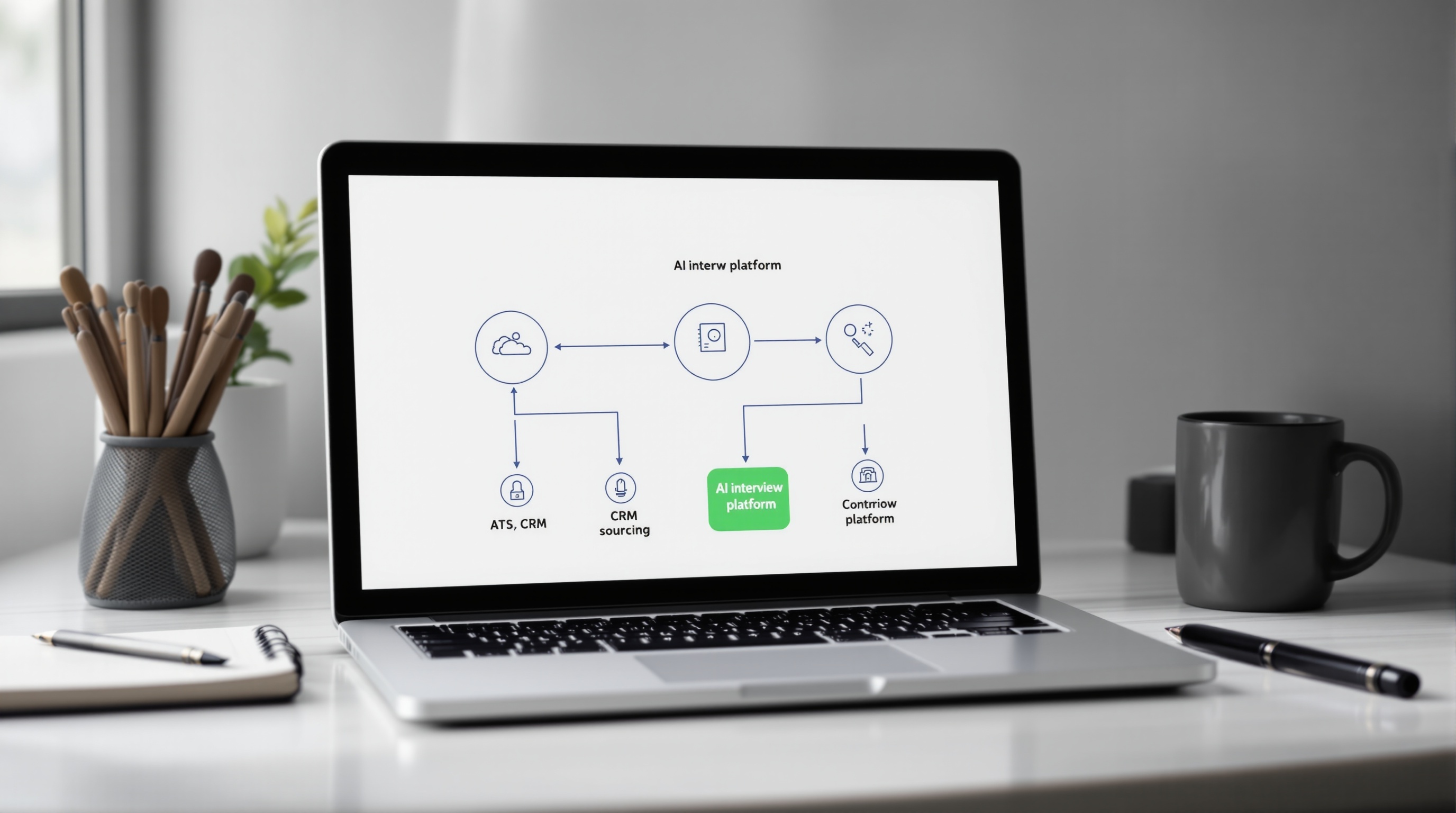
A modern HR tech stack for recruiting integrates tools like ATS, CRM, sourcing platforms, and AI-powered interview intelligence to streamline hiring, enable data-driven decisions, reduce bias, and accelerate time-to-hire. By strategically combining these components, businesses, especially Small and Medium-sized Businesses (SMBs), can build a cohesive and efficient talent acquisition process that rivals larger enterprises.
What is a Recruiting HR Tech Stack and Why It's Crucial for SMBs
At its core, a recruiting HR tech stack is the digital infrastructure that powers your entire talent acquisition process. It's not just a random collection of software; it's a carefully curated and integrated ecosystem of tools designed to attract, engage, assess, and hire candidates. Think of it as the central nervous system for your recruitment efforts, ensuring that every step, from initial outreach to onboarding, is as efficient and effective as possible. As talent acquisition evolves, so must the tools that support it.
For Small and Medium-sized Businesses (SMBs), this integrated approach is particularly vital. Larger enterprises often have dedicated teams and vast resources, but SMBs need to maximize every dollar and minute spent on hiring. A well-built tech stack allows SMBs to:
- Automate Repetitive Tasks: Free up recruiters from manual data entry, scheduling, and initial screening to focus on strategic candidate engagement.
- Improve Data Accuracy and Accessibility: Centralize candidate information, ensuring a single source of truth and reducing errors.
- Enhance Candidate Experience: Provide a smooth, professional, and timely application and interview process.
- Make Data-Driven Decisions: Leverage analytics to understand hiring trends, identify bottlenecks, and measure ROI.
- Compete for Talent: Offer a sophisticated and efficient hiring process that attracts top candidates, regardless of company size. This is key for talent acquisition for small businesses looking to punch above their weight.
Without integration, these tools operate in silos, leading to inefficiencies, lost data, and a disjointed candidate experience. An integrated stack, on the other hand, ensures seamless data flow and a unified approach to talent acquisition, making it an indispensable asset for any recruiting team aiming for success in 2026. A structured approach, much like a hiring process checklist, ensures no critical step is missed.
Core Components of Your Recruiting Technology Stack
Building a robust recruiting tech stack involves understanding the purpose and function of each core component. While specific needs vary, these are the foundational elements that form the backbone of most modern talent acquisition strategies in 2026. Each component addresses distinct challenges in the hiring lifecycle.
Applicant Tracking Systems (ATS)
The Applicant Tracking System (ATS) is the central hub for managing job postings, collecting applications, and tracking candidate progress through the hiring pipeline. It automates the initial stages of recruitment, ensuring that all applications are captured, organized, and easily searchable. A good ATS helps maintain compliance, reduces the risk of losing candidates, and provides a foundational database for your talent pool. Without an ATS, managing high volumes of applicants becomes chaotic, leading to missed opportunities and a poor candidate experience.
Candidate Relationship Management (CRM)
While an ATS manages active applicants, a Candidate Relationship Management (CRM) system focuses on nurturing potential candidates and building long-term talent pipelines. It allows recruiters to engage with past applicants, passive candidates, and leads from various sources, keeping them warm for future opportunities. A CRM is essential for proactive talent sourcing and for building a robust talent pool that can be tapped into quickly when needs arise. It ensures that even candidates who weren't a fit for a current role remain connected and informed, preventing the loss of valuable potential hires.
Sourcing and Outreach Tools
These tools are designed to help recruiters find and connect with potential candidates beyond inbound applications. This includes platforms for searching professional networks, job boards, resume databases, and social media. Advanced sourcing tools often incorporate AI to identify ideal candidate profiles, suggest outreach messages, and automate initial contact. Effective sourcing is critical for filling hard-to-fill roles and for building a diverse candidate pipeline. Without robust sourcing tools, recruiters are limited to passive candidates, significantly narrowing their talent pool.
AI-Powered Interview & Screening Platforms (The Hirero Advantage)
This is where the 'intelligence' in your HR tech stack truly comes to life. AI-powered interview and screening platforms, such as Hirero, go beyond basic automation to introduce objectivity, efficiency, and deeper insights into the evaluation process. These tools leverage artificial intelligence to:
- Automate First-Round Screening: Quickly assess a large volume of applications based on predefined criteria, identifying top contenders.
- Generate Structured Interview Guides: Create consistent, job-relevant interview questions designed to elicit comparable responses.
- Conduct AI-Powered Interviews: Offer candidates an asynchronous interview experience where their responses are recorded and analyzed.
- Provide Evidence-Based Scorecards: Generate objective scores for candidates based on their interview responses, skills, and other relevant data, helping to reduce bias in hiring with AI.
- Offer Hiring Intelligence: Provide actionable insights and data to help recruiters and hiring managers make more informed, evidence-backed decisions.
Hirero exemplifies this category, offering a specialized solution that integrates seamlessly with existing ATS and CRMs. It focuses on transforming the interview process from a subjective art into an objective science, ensuring that the best candidates are identified based on merit and fit, not just first impressions. For SMBs seeking the best AI interview software for SMB recruiters, platforms like Hirero offer enterprise-level capabilities without the enterprise-level complexity. This focus on objective evaluation is crucial for improving the quality of hire.
Assessment and Skills Testing Tools
To further validate candidate suitability, assessment and skills testing tools are invaluable. These can range from technical skills tests (e.g., coding challenges, writing samples) to cognitive ability tests, personality assessments, and aptitude tests. When integrated into the hiring workflow, they provide objective data points that complement interview performance, offering a more holistic view of a candidate's potential to succeed in the role. These tools help move beyond subjective impressions to measurable competencies.
Data Analytics and Reporting Tools
The final, yet critical, component is data analytics and reporting. This layer consolidates data from all other tools in the stack to provide actionable insights. Key metrics to track include time-to-hire, cost-per-hire, source of hire, candidate source quality, offer acceptance rates, and diversity metrics. Robust analytics allow recruiters to identify inefficiencies, prove the ROI of their efforts, and make informed strategic decisions to continuously improve the hiring process. Without this, the data generated by other tools remains largely untapped potential.

The Power of Integration: Making Your Stack Work Together Seamlessly
The true magic of an HR tech stack lies not just in the individual tools, but in how they communicate and collaborate. Integration ensures that data flows freely between systems, eliminating manual data entry, reducing errors, and providing a unified view of the candidate journey. This seamless interaction is what transforms a collection of software into a strategic advantage. When tools don't talk to each other, recruiters spend valuable time on manual data transfer, increasing the risk of errors and frustrating candidates.
Consider these integration scenarios:
- Sourcing to ATS/CRM: When a recruiter finds a promising candidate on LinkedIn or another sourcing platform, the tool can push their profile directly into the ATS or CRM, creating a new contact or lead without manual copy-pasting.
- ATS to Interview Platform: As a candidate moves through the hiring stages in the ATS, their profile and relevant details are automatically passed to an AI interview platform like Hirero, triggering the next assessment step.
- Interview Platform to ATS: The results and scores from AI-powered interviews and assessments are fed back into the ATS, providing hiring managers with objective data directly alongside the candidate's application.
- All Tools to Analytics: Data points from every stage – sourcing metrics, application volume, interview scores, offer acceptance rates – are aggregated into a central analytics dashboard, offering a comprehensive view of recruitment performance.
- CRM to ATS for Re-engagement: If a candidate was previously nurtured in the CRM but not hired, they can be easily reactivated in the ATS when a new, suitable role opens up.
This interconnectedness not only saves time and reduces errors but also ensures a consistent and professional experience for candidates. It allows recruiters to spend less time on administrative tasks and more time on building relationships and making strategic hiring decisions. For example, integrating Hirero's objective scoring with your ATS means hiring managers see consistent, data-backed evaluations for every candidate, moving away from subjective 'gut feelings'. This level of integration is what differentiates a basic software suite from a truly intelligent talent acquisition platform, as highlighted by analyses of talent acquisition software.
Building Your Ideal Recruiting Tech Stack: A Practical Framework for SMBs
Creating an effective recruiting tech stack doesn't require a massive budget or a dedicated IT department, especially for SMBs. It's about strategic selection and smart integration. Here’s a framework to guide you:
Step 1: Assess Your Current Needs and Gaps
Before diving into tools, map out your current hiring process. Where are the biggest bottlenecks? What tasks consume the most recruiter time? Are you struggling with candidate quality, time-to-hire, or bias? For instance, if your primary challenge is sifting through hundreds of resumes, an ATS with strong filtering capabilities or an AI screening tool like Hirero might be your first priority. If you're losing good candidates due to slow follow-up, a CRM becomes essential. Understanding these pain points will dictate your tool selection. Consider the cost of inaction: prolonged vacancies, poor hires, and damaged employer brand.
Step 2: Prioritize Integration and Data Flow
When evaluating tools, always ask about integration capabilities. Does the tool offer APIs or pre-built integrations with your existing systems (ATS, HRIS, etc.)? For SMBs, choosing tools that are designed to work together or offer flexible integration options is paramount. A tool that creates a new data silo is counterproductive. For example, ensuring your AI interview platform can seamlessly push scores back to your ATS is crucial for efficient decision-making. Conversely, a lack of integration means manual data entry, which is time-consuming and prone to errors, negating the efficiency gains of the individual tools.
Step 3: Evaluate Tools for AI and Evidence-Based Capabilities
In 2026, AI is no longer a futuristic concept but a practical necessity for competitive recruiting. Look for tools that leverage AI to enhance objectivity, reduce bias, and improve efficiency. This includes AI-powered sourcing, resume parsing, interview screening, and predictive analytics. Platforms like Hirero are at the forefront, offering features that provide objective, evidence-based evaluations, moving beyond subjective assessments. This focus on data-driven insights is key to improving the quality of hire and ensuring fairness. Exploring evidence-based interviewing for small businesses can highlight the benefits of this approach. When evaluating AI tools, consider their transparency, the data they use, and their ability to mitigate bias rather than amplify it.
| Component | Primary Function | Key Benefits | Integration Focus | Example Use Case |
|---|---|---|---|---|
| ATS | Manage job postings, applications, candidate pipeline stages. | Centralized data, compliance, efficiency, basic candidate tracking. | Integrates with job boards, HRIS, assessment tools. | A candidate applies for a job, their profile is automatically logged. |
| CRM | Nurture talent pipelines, engage passive candidates, build talent pools. | Proactive sourcing, candidate engagement, reduced time-to-fill for future roles. | Integrates with ATS, email marketing, social media. | Sending targeted email campaigns to past applicants for new roles. |
| Sourcing Tools | Find active and passive candidates across various platforms. | Expanded reach, access to diverse talent, faster candidate identification. | Integrates with ATS/CRM, LinkedIn, other professional networks. | Using AI to identify and contact potential candidates for a niche role. |
| AI Interview & Screening | Automate screening, conduct structured interviews, provide objective evaluations. | Reduced bias, consistent evaluation, increased efficiency, hiring intelligence. | Integrates with ATS/CRM to receive candidate data and send scores. | Hirero analyzes candidate responses to ensure fair evaluation against job requirements. |
| Analytics | Track key recruitment metrics and generate performance reports. | Data-driven decision-making, ROI measurement, process optimization. | Aggregates data from all other stack components. | Identifying which sourcing channels yield the highest quality hires. |
Future Trends Shaping Recruiting Technology
The landscape of recruiting technology is constantly evolving. Staying ahead means understanding emerging trends that will shape how we hire in the coming years. Key areas to watch include:
- Hyper-Personalization: AI will enable even more tailored candidate experiences, from outreach messages to interview questions.
- Ethical AI and Bias Mitigation: Increased focus on ensuring AI tools are fair, transparent, and actively work to reduce human bias, not perpetuate it. Platforms like Hirero are built with this principle at their core.
- Predictive Analytics: AI will move beyond descriptive reporting to predictive modeling, forecasting hiring needs and identifying potential flight risks.
- Enhanced Candidate Experience Automation: More sophisticated chatbots and automated communication flows to keep candidates informed and engaged.
- Skills-Based Hiring: A shift from credential-based hiring to focusing more on demonstrable skills, requiring tools that can effectively assess these.
- Continued Integration: The push for seamless integration will continue, with platforms aiming to become all-in-one solutions or offer deep, robust connections.

FAQ
Ready to Build Your Intelligent Recruiting Stack?
Transform your hiring process from a collection of tools into a strategic, data-driven engine. Discover how Hirero's AI-powered interview intelligence can integrate with your existing stack to reduce bias, improve candidate evaluation, and accelerate your time-to-hire. Reduce time-to-hire for SMBs with our proven strategies.