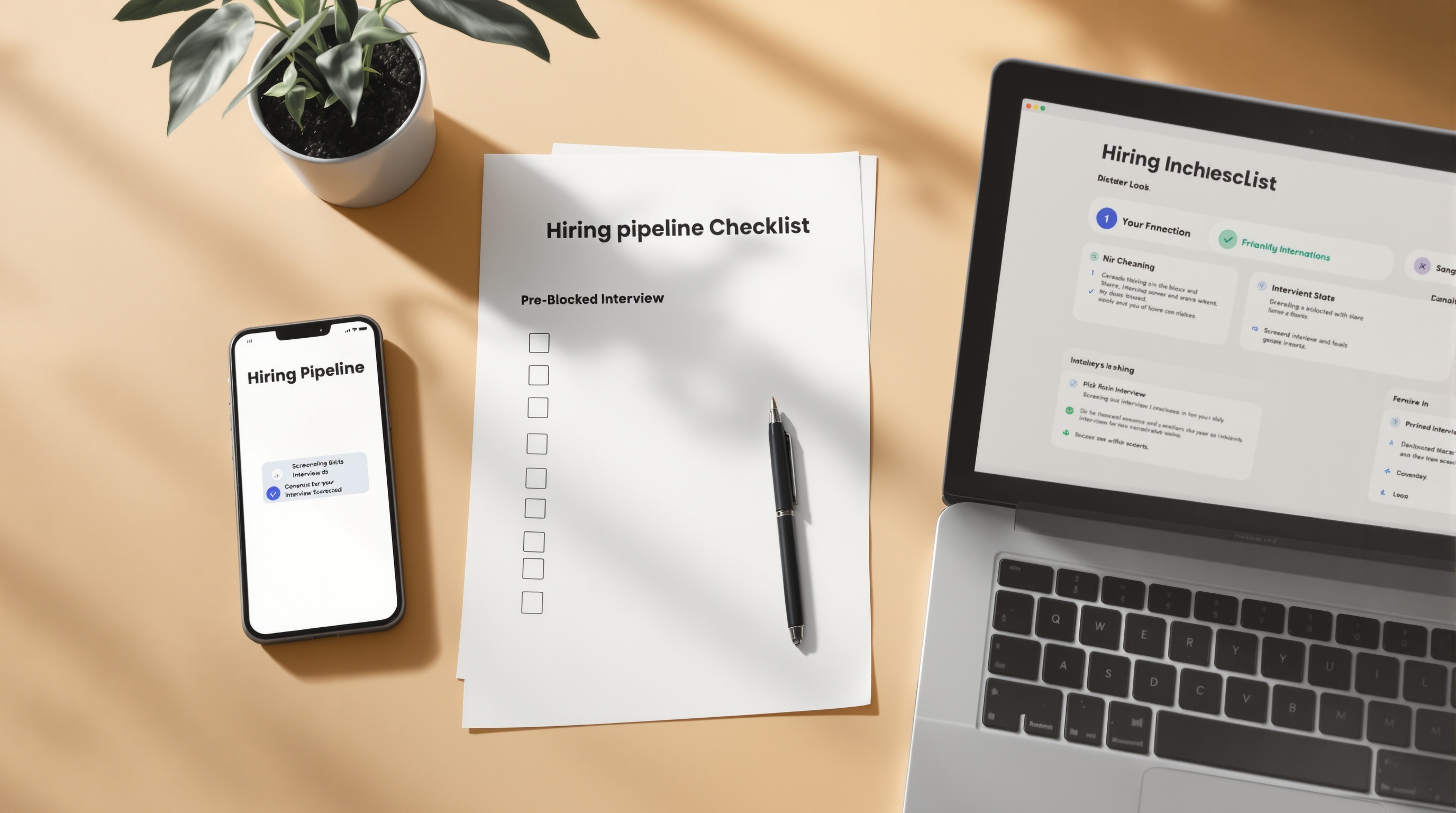
To reduce time-to-hire for SMBs, standardize the funnel and remove idle time: add a tight intake, pre-screen with AI, enforce structured interviews and scorecards, and set 24–48 hour SLAs for resume review, scheduling, and feedback. Instrument time-to-hire now (offer accepted minus candidate enters pipeline), attack the longest idle step first, and automate interview prep and first-round screening with tools like Hirero. In practice, that means clarifying must-haves on day one, triaging inbound applicants quickly, blocking recurring interview windows, and collecting evidence-backed scorecards within 24 hours. Aim for roughly 20–30 days for many non-technical SMB roles and 30–45+ for technical or leadership roles, then beat your own baseline each quarter. For a fundamentals cross-check on process steps, see the SHRM hiring checklist.
The 7 fastest wins to cut time‑to‑hire (checklist)
1) Tighten the intake (same day)
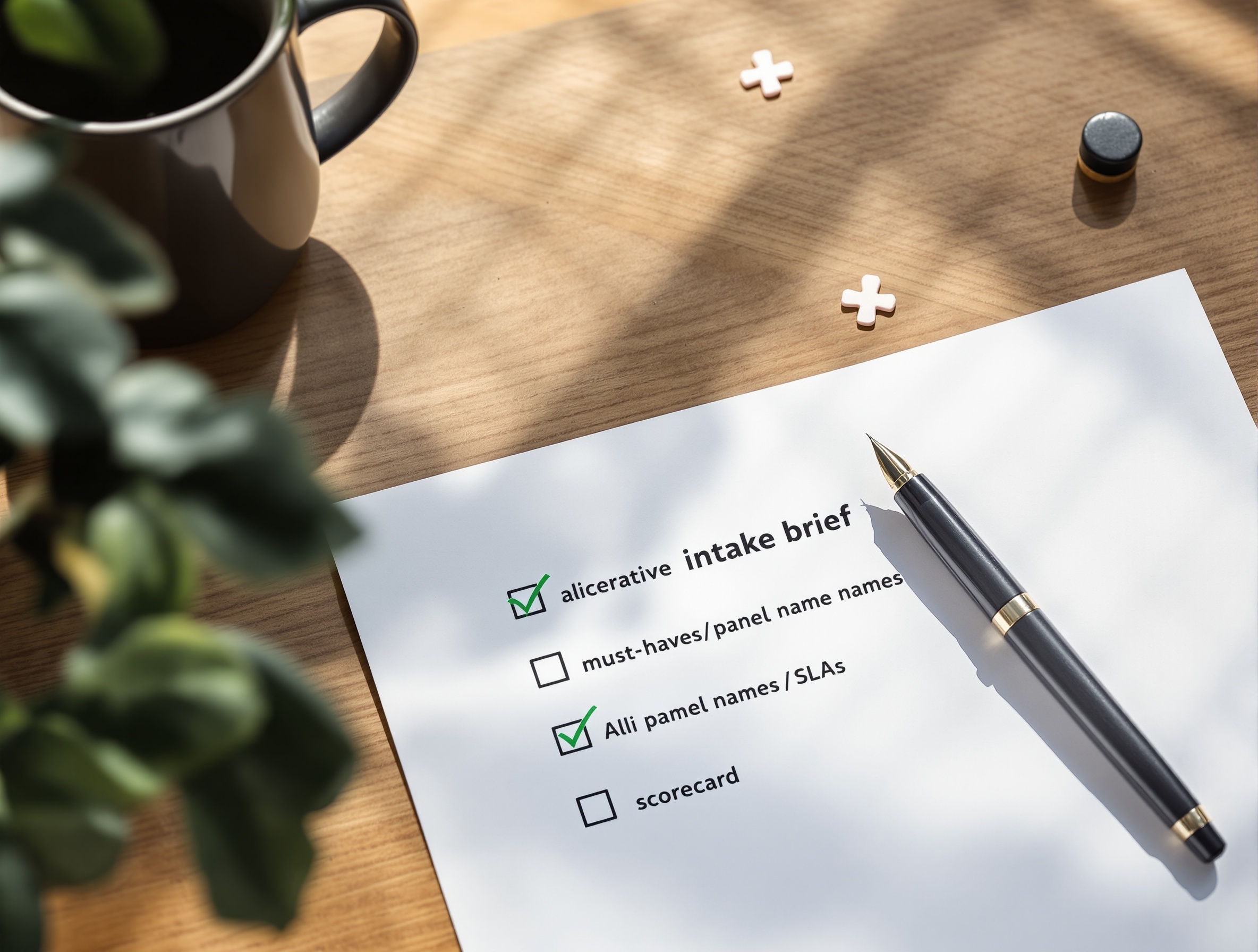
Host a 30‑minute intake the day the req opens. Capture must‑have vs. nice‑to‑have criteria, the decision-maker, the interview panel (with roles), and SLAs: 24 hours for resume review, 24 hours for scorecards, and 48 hours to schedule screens. Output a one‑page brief and a role scorecard. This prevents late requirement changes and interview drift. If the role is evolving, mark the first 3 must‑haves and commit to holding them steady for two weeks—flex only the nice‑to‑haves. Pair this with a simple rubric so every interviewer evaluates the same competencies. For rubric examples and a ready‑to‑use template, grab our standardized interview scorecard template.
2) Pre‑screen with AI (48 hours)
Configure AI‑assisted screening to triage inbound applicants and surface the right top 20% fast. Ask consistent, role‑relevant prompts (e.g., must‑have qualifications and situational questions) so you capture comparable signals. Hirero can run AI‑powered interview screening that standardizes early questions and summarizes evidence so humans focus on finalists. See how first‑round screening fits a broader workflow in our guide to AI-powered interview screening. To reduce bias, document the competencies you’re testing and audit outputs regularly—our playbook on how to reduce bias in hiring with AI shows a practical review cadence.
3) Standardize structured interviews (2–3 days)
Generate a role‑specific interview guide organized by competencies. Assign question ownership to each interviewer to avoid duplication (e.g., problem solving to the hiring manager, stakeholder management to a cross‑functional peer). Hirero can produce these guides in minutes so you can launch consistent, bias‑resistant interviews quickly. For a step‑by‑step pattern (with question templates), see creating effective interview guides. The result is less back‑and‑forth, fewer reschedules, and clearer evidence for debriefs.
4) Automate scheduling (same day)
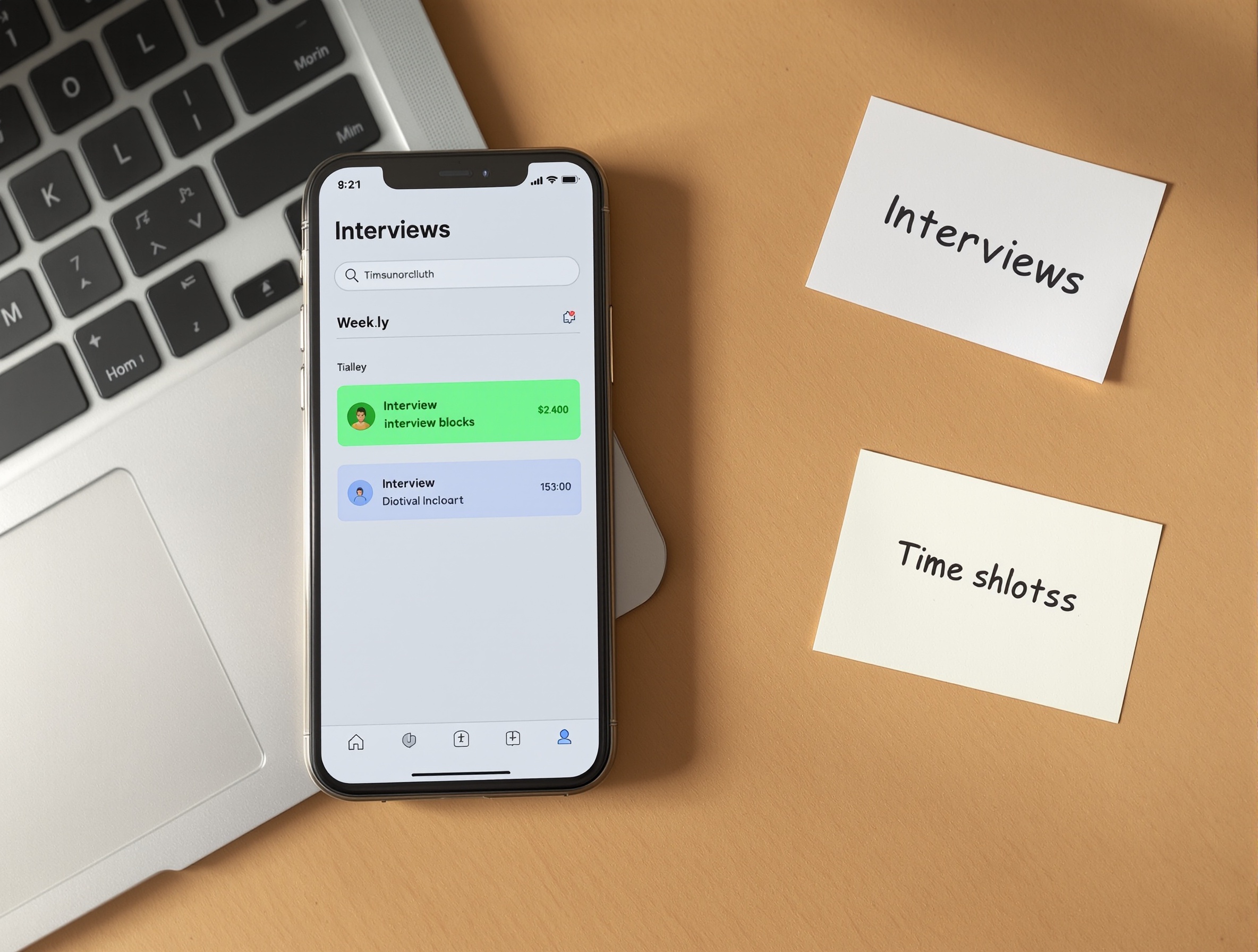
Use self‑scheduling links that align with pre‑blocked panel windows. For onsites, consolidate multiple interviews into a single half‑day block. Group manager screens into two recurring 60‑minute windows per week to eliminate scattered availability. Add automated reminders for candidates and interviewers to cut no‑shows. Many SMBs find this step alone removes 3–5 idle days from their funnel because the back‑and‑forth disappears.
5) Enforce 24‑hour feedback SLAs (immediate)
Send scorecard links the moment an interview ends and require evidence within 24 hours. Use structured rubrics so feedback can be compared apples‑to‑apples across the panel. Hirero’s evidence‑backed scorecards centralize notes and highlight red/yellow/green signals, making debriefs short and decisive. If your panel often drifts or forgets to submit feedback, start with our standardized interview scorecard template and this primer on objective interview scorecards.
6) Parallelize steps (this week)
Once a candidate clears must‑have criteria, start references and lightweight assessments in parallel with manager screens. Prepare offer components early (range, level, approvers) so you can draft immediately after the final interview. Keep any work sample short (30 minutes) and score it with the same rubric you’ll use post‑hire to avoid surprises. Parallelization shortens the tail of your process without adding risk when competencies are already verified.
7) Kill “nice‑to‑have” stages (this week)
Audit every step that doesn’t change the hiring decision. Replace long take‑homes with a 30‑minute timeboxed exercise or a guided portfolio walkthrough. If a panel interview is primarily social, fold the rapport check into another conversation. The right question is: “If we remove this step, would our decisions change?” If not, cut it and monitor quality signals for two hiring cycles before reconsidering.
Time‑to‑hire vs time‑to‑fill (and why both matter)
Both metrics matter, but they answer different questions. Time‑to‑hire shows your in‑pipeline velocity and candidate experience; time‑to‑fill captures total vacancy cost from req approval to accepted offer. Track both weekly so you can forecast headcount needs and pinpoint where to remove process idle time.
- Time‑to‑hire formula:
offer accepted date − pipeline entry date(e.g., application submitted or sourced candidate moved to stage 1). - Time‑to‑fill formula:
offer accepted (or start) − requisition approval (or job posted). - Why both: time‑to‑fill informs workforce planning and budget; time‑to‑hire exposes scheduling, feedback, and decision bottlenecks you can actually fix.
If you’re building your first dashboard, start simple and align definitions with hiring managers in writing. For a small‑business perspective on organizing the process, the ADP small business hiring guide is a helpful companion, then layer in structured interviewing and scorecards for consistent signal capture.
Measure and instrument your funnel in 48 hours
- Baseline the last 5–10 hires by role. For each, record dates for: req approved, post live, pipeline entry, first screen, manager screen, panel/onsite, offer sent, offer accepted.
- Compute medians per stage and overall time‑to‑hire. Circle the single longest idle step (typically scheduling, manager review, or panel feedback).
- Add lightweight instrumentation now: stage‑change audit trail, 24–48 hour SLA timers for resume review/scheduling/scorecards, and weekly dashboards with three KPIs—median time‑to‑hire, stage aging, pass‑through rates.
- Publish a one‑page weekly update to hiring managers: new reqs, aging candidates, SLA breaches, blockers, owner, and next action due date.
Tips: define “pipeline entry” consistently (application received or moved to stage 1), track medians (not averages) so a few outliers don’t distort trends, and set visible SLAs. Keep the dashboard short enough to review in five minutes. Use a simple color key so everyone can spot urgent stage‑aging issues at a glance.

Comparison table: Which levers cut time‑to‑hire fastest?
| Tactic | Expected impact (days saved) | Effort (setup) | Risk / tradeoffs | Best for | Example tools / notes |
|---|---|---|---|---|---|
| AI pre‑screening | High (2–5) | Low | Needs clear must‑haves and bias audits | Inbound‑heavy roles | Hirero AI screening; ATS filters |
| Structured interview guides | Med–High (1–3) | Med | Requires interviewer training | Any multi‑panel role | Hirero guide generation; shared templates |
| Evidence‑backed scorecards | Med (1–2) | Low | Discipline needed for 24h SLAs | Multi‑panel decisions | Hirero scorecards; rubrics |
| Automated scheduling | High (3–5) | Low | Panel must pre‑block windows | Busy managers / panels | Self‑scheduling links; coordinator tools |
| Work sample vs full take‑home | Med (1–2) | Med | Timebox and validate rubric | IC roles where skills predict success | Short, role‑relevant exercise |
| Intake meeting + role scorecard | Med (1–2) | Low | Needs stakeholder alignment | New or evolving roles | One‑page brief; scorecard template |
| Parallelize references/assessments | Med (1–2) | Low | Start once must‑haves are met | Late‑stage finalists | Lightweight references; pre‑draft offers |
Use the table like a backlog: pull the top item you can implement this week. Re‑measure the slowest stage every Friday and pick the next lever accordingly. As you layer tactics, the compound effect trims multiple idle days without adding risk.
A 14‑day SMB sprint to reduce time‑to‑hire
Days 1–2: Intake + instrumentation
- Run a 30‑minute intake; finalize must‑haves, panel, and SLAs.
- Publish a one‑page role brief + scorecard rubric; commit to it for two weeks.
- Turn on stage‑aging and SLA timers; define pipeline entry date.
- Set up a minimal dashboard: median time‑to‑hire, stage aging, pass‑through by stage.
Days 3–4: AI triage (pre‑screen)
Configure role‑specific, competency‑aligned prompts; send a brief async screen or structured questionnaire to inbound candidates. Use Hirero to summarize each response against must‑haves so your recruiter and manager can decide within 24 hours who advances. Document reasons for rejection to maintain fairness and future audits. See our overview of AI-powered interview screening for setup tips and guardrails.
Days 5–6: Structured interview kits
Generate an interview kit by competency (e.g., problem solving, role skills, collaboration, ownership). Assign question ownership to prevent overlap. Calibrate on what “green/yellow/red” evidence looks like before you start. Hirero can create structured guides from your intake in minutes. For a complete walkthrough, check creating effective interview guides.
Days 7–9: Scheduling overhaul + onsite consolidation
- Pre‑block two weekly interview windows for the panel.
- Enable self‑scheduling and batch onsites into a single half‑day.
- Automate reminders to reduce no‑shows and encourage 24‑hour scorecards.
- Publish the week’s open interview slots in your req brief so managers can plan around them.
Days 10–11: Scorecards + decision rules
Adopt evidence‑based scorecards with clear rubrics and collect them within 24 hours for every interview. Define how you’ll decide: for example, a “go” requires two greens on must‑have competencies and no reds on values fit. Use Hirero to centralize scorecards so the hiring manager sees patterns at a glance. If you need examples and a template, start here: standardized interview scorecard template.
Days 12–13: Parallelize late stages + pre‑draft the offer
- Start references once a finalist clears must‑haves.
- Send a short, rubric‑scored work sample where predictive.
- Draft compensation and approvals so you can move within hours after the final panel.
Day 14: Retrospective + lock improvements
Compare new stage timings to your baseline. Identify which step cut the most days and codify it in your playbook. Close the loop with the hiring manager: show the updated median time‑to‑hire, any SLA breaches, and the plan for the next two weeks. Continuous, small improvements compound faster than a big, one‑time overhaul.
Tools that reduce time‑to‑hire (and where Hirero fits)
Interview intelligence (Hirero) for screens, guides, and scorecards
Hirero helps SMB recruiters standardize the top of the funnel and keep interviews consistent: AI‑powered interview screening to triage inbound applicants, instant interview guide generation per role, and evidence‑backed scorecards that capture structured feedback within 24 hours. Together, these steps remove coordinator bottlenecks and shorten debriefs without sacrificing signal quality. For context on designing a fair, comparable process, see evidence‑based interviewing for small businesses.
ATS automations and scheduling links
Use your ATS to auto‑advance clear rejections, send templated emails, and trigger self‑scheduling. Pre‑block recurring panel windows and let candidates book into them. A well‑configured ATS + self‑scheduling commonly removes 3–5 days of idle time. For a market view of AI and tooling considerations, see the Greenhouse guide to AI recruiting software.
Lightweight, rubric‑scored assessments (when predictive)
Use brief work samples (≤30 minutes) only for roles where they predict success. Score them with the same rubric you use in interviews so evidence stays comparable. Avoid long take‑homes that create drop‑off and delay decisions.
Quality‑of‑hire guardrails (so speed doesn’t backfire)
- Use structured interviews with assigned question ownership to reduce bias and increase signal consistency.
- Require evidence in scorecards (quotes, examples tied to competencies) before a thumbs‑up. Reference our guide to objective interview scorecards.
- Timebox assessments to 30 minutes and only where they predict outcomes; score with a rubric.
- Track leading quality indicators: early ramp markers, 90‑day success proxy, hiring‑manager satisfaction.
- If pass‑through spikes or 90‑day attrition rises, add a targeted check (e.g., a short work sample) rather than expanding every stage.
- Keep an audit log for any AI‑assisted screening and review fairness regularly; our playbook on how to reduce bias in hiring with AI outlines practical safeguards.
Metrics to track weekly (simple dashboard)
- Time‑to‑hire (median) overall and by role.
- Stage aging: how many candidates have exceeded SLAs for resume review, scheduling, or scorecards.
- Pass‑through rates by source and stage (watch for sharp drops).
- Offers sent/accepted and documented reasons for declines.
- Quality proxies: first‑90‑day success markers and hiring‑manager satisfaction ratings.
FAQ
Frequently asked questions
What is time-to-hire and how do I calculate it?
Time-to-hire is the number of days from when a candidate enters your pipeline (or applies) until they accept your offer. Calculate it as: time-to-hire = offer accepted date − pipeline entry date. Track this at the role level and as an overall median so you can compare week to week.
What’s a good time-to-hire benchmark for SMBs?
Ranges vary by market and role. Many SMBs target roughly 20–30 days for common non-technical roles and 30–45+ days for technical or leadership roles. Your best benchmark is your own recent median—improve it by removing idle time (scheduling delays, slow feedback, unclear intake) and re-check quarterly.
What is the difference between time-to-hire and time-to-fill?
Time-to-hire measures candidate-stage velocity: offer accepted − pipeline entry. Time-to-fill measures vacancy duration: offer accepted (or start) − requisition approval (or posting). Use time-to-fill for capacity planning and budget forecasting; use time-to-hire to diagnose interview and decision bottlenecks.
How do I reduce time-to-hire without hurting quality?
Keep structured interviews, require evidence-backed scorecards within 24 hours, and timebox any assessments. Remove steps that don’t change the decision, parallelize late-stage checks, and use AI for early screening while auditing for bias. Tools like Hirero help standardize guides and scorecards so speed and quality rise together.
Which tools reduce time-to-hire the most for SMBs?
Big wins usually come from: interview intelligence (e.g., Hirero for AI pre-screening, guide generation, and evidence-based scorecards), ATS stage automations and self-scheduling, and lightweight, rubric-scored work samples for roles where they predict success.
How do I speed up interviews when managers are busy?
Pre-block recurring panel windows, enable candidate self-scheduling, assign question ownership to prevent overlap, and enforce 24‑hour feedback SLAs with reminders. Summarize evidence in a shared view (e.g., Hirero scorecards) so debriefs become shorter and more decisive.
Ready to cut days from your hiring cycle?
If you want to compress first‑round screening, spin up structured guides in minutes, and collect evidence‑backed feedback within 24 hours, try this on one role this week with Hirero in the loop. Standardize the process, then automate the hand‑offs—your time‑to‑hire will drop without sacrificing quality.